
Talking about Truth Overview
McGilchrist reframes truth as relational, not merely factual, and explores how the hemispheres seek certainty or responsiveness.
Truth deepens through lived contact, not abstract capture.
Loading transcript… If it doesn’t load, download the transcript.

Talking about Truth
Truth is not something we stand outside of and inspect, but something that comes into being through the way we meet the world.
In Talking about Truth, McGilchrist turns to one of the most contested ideas of modern life: truth. The difficulty, he suggests, is not that truth has disappeared, but that we have misunderstood what it is. Too often, truth is imagined as a static object, existing independently of us, waiting to be captured by the correct theory or description. Against this, McGilchrist proposes a view of truth as relational — something that emerges through attention, context, and lived engagement.
The difference between the hemispheres offers a way into this problem. The left hemisphere seeks certainty. It wants clarity, definition, and closure. Its instinct is to reduce complexity to something graspable, even if that requires freezing what is fluid. The right hemisphere, by contrast, remains open to ambiguity and change. It recognises that reality unfolds in time and cannot be fully arrested without distortion.
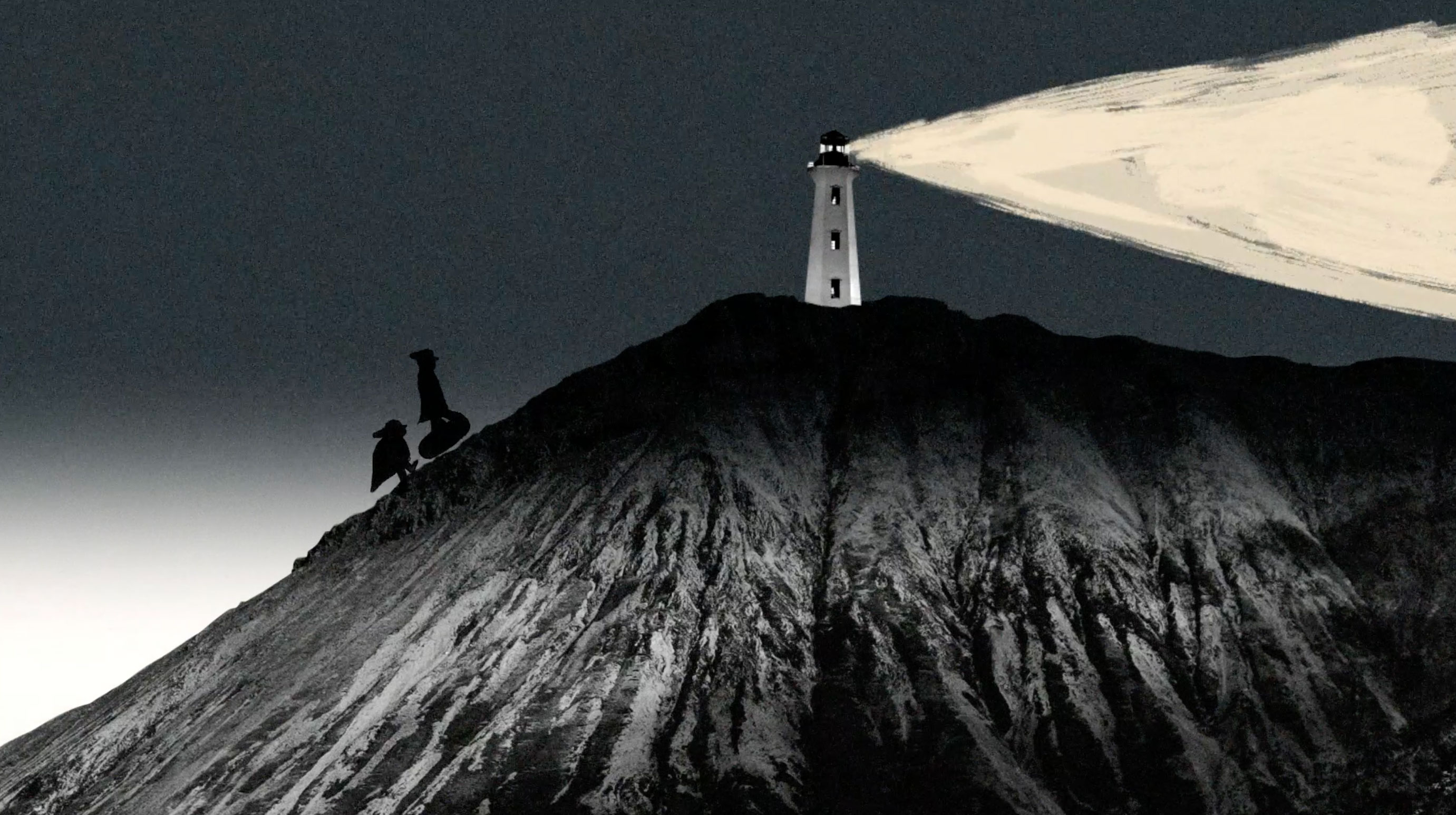
This difference becomes clear when McGilchrist describes the mountain near his home. Over centuries, the same mountain has been experienced as a navigational marker, a sacred presence, an object of beauty, a geological structure, and a commercial resource. Each of these encounters is truthful, yet none is exhaustive. The error lies in assuming that behind these perspectives there must be a single, final account — the “real” mountain — against which all others are merely subjective.
Such an assumption leads directly into familiar philosophical dead ends. Correspondence theories of truth imagine that our minds create representations which must somehow match an external object, but leave unanswered how we could ever verify the match. Coherence theories risk producing internally consistent systems that float free of lived reality. Consensus theories collapse the moment a genuinely new idea appears. Each approach, taken alone, abstracts truth away from experience.
McGilchrist instead gestures toward a pragmatic understanding: truth is what continues to respond when held in contact with the world. Ideas reveal their truthfulness, or lack of it, through their consequences in lived experience. When a way of understanding persistently breaks down, when it repeatedly fails to orient us meaningfully, it shows itself to be inadequate.
This is not a licence for relativism. Some truths are truer than others because they do greater justice to the richness and depth of reality. Truth can be ranked, not by how neatly it fits a theory, but by how well it accommodates complexity without reducing it. The right hemisphere, attuned to context and relationship, is better suited to such judgements than the left hemisphere operating alone.
The conversation also exposes a modern temptation: to conclude that because there is no single, final truth, all truths must be equal. McGilchrist rejects this as both incoherent and unliveable. To say that nothing is truer than anything else is itself a truth claim, one that quietly assumes its own superiority. More importantly, such a position would make orientation impossible. We could not act, choose, or commit to anything at all.
Truth, then, is inseparable from how we live. It is not a possession but a responsibility. To hold truth too rigidly is to mistake the map for the terrain; to abandon it altogether is to lose direction entirely. Wisdom lies in remaining answerable to reality — allowing our truths to be shaped, corrected, and deepened by continued encounter.
Test your memory of the Talking about Truth conversation. Choose the best answer.
Truth is described as:
The left hemisphere tends to seek:
The mountain example shows that:
A key problem with correspondence theories is:
Truth, pragmatically, is what:
Some truths are “truer” because they:
Relativism fails because:
Truth is best understood as:
The right hemisphere is better suited to:
Losing truth entirely leads to:

“Truth is a responsibility to remain answerable to reality.”
Next chapter
Continue into Chapter 8 to explore encountering reality.

Explore
 Free
Free
 Preview
 Preview
 Preview
 Preview
 Preview
Preview
Preview
Preview
Preview
 Preview
 Preview
 Preview
 Preview
 Preview
 Preview
 Preview
 Preview
 Preview
 Preview