
Talking about Talking Overview
Language is explored as an embodied, relational practice rather than a self-contained system.
Meaning emerges in the space between people.
Loading transcript… If it doesn’t load, download the transcript.

Talking about Talking
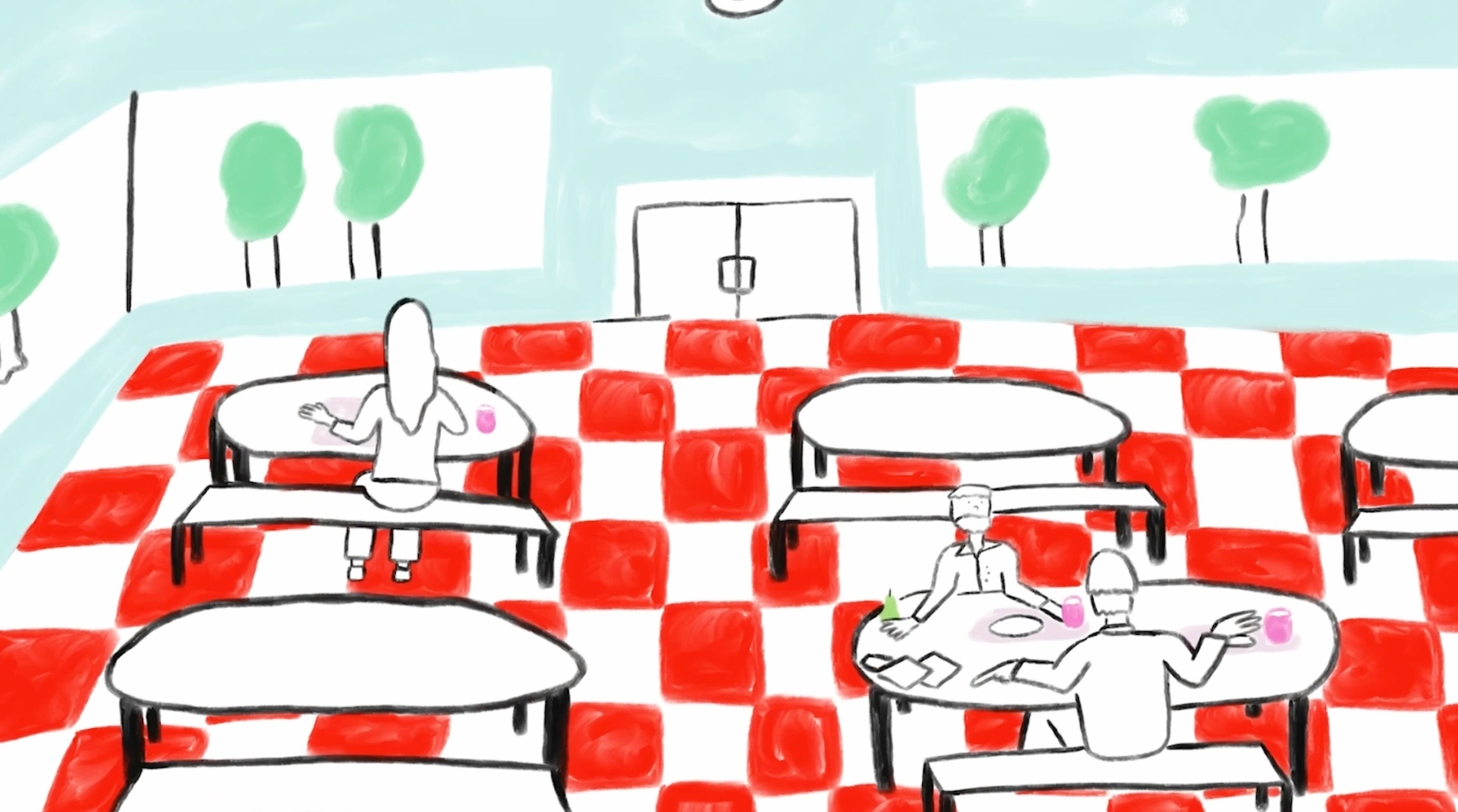
Meaning passes between us before it settles into words.
Talking about Talking reflects on language not as a technical system, but as an expression of lived relationship. McGilchrist draws on Plato’s image of philosophy as a flame kindled between people: something that arises in the space between minds rather than being manufactured in isolation. Authentic thought, on this view, is not a matter of clever argument, but of shared attention brought to bear on reality.
When philosophy becomes detached from life, it risks collapsing into linguistic games. Words are treated as self-sufficient tokens, endlessly rearranged and analysed, while the experiences from which they arose are forgotten. Language becomes representational in the thinnest sense: a system pointing only to itself. McGilchrist is critical of this tendency, particularly within academic philosophy, where precision of language can be mistaken for depth of understanding.
Language, he insists, is embodied. It grows out of our mode of being in the world — our posture, gestures, rhythms, and shared practices. Words do not hover above life; they emerge from it. When this grounding is lost, conversation becomes brittle. It may be technically impressive, yet strangely lifeless.
The mind–body problem provides a revealing example. For centuries it has been debated as an abstract puzzle: how does an immaterial mind interact with a material body? McGilchrist came to feel that something essential was missing from such discussions. However sophisticated the arguments, they remained curiously disembodied. They took place in seminar rooms, far removed from the lived realities of illness, injury, and suffering.
This dissatisfaction led him toward medicine. Rather than asking what the mind *is* in theory, he wanted to see what happens when something goes wrong — when a stroke alters perception, when brain damage reshapes personality, when illness changes a person’s way of being in the world. These encounters revealed something philosophy alone could not: that mind and body are not separable components but aspects of a single, lived reality.
A simple linguistic distinction captures this difference. To say “I have a body” treats the body as an object one possesses. To say “I am a body” recognises embodiment as identity. The left hemisphere tends toward the former, preferring ownership and abstraction. The right hemisphere recognises the latter, understanding the self as inseparable from its embodied existence.
McGilchrist suggests that this distinction extends far beyond the body. Belief, for example, can be treated as something one *has* — a proposition held in the mind. This is a left-hemisphere framing. Alternatively, belief can be understood as a way of being: a disposition, an orientation toward the world. In this sense, belief is relational. It concerns what one loves, honours, and is drawn toward, rather than what one can state.
Identity, then, is not something to be discovered fully formed, as though it lay hidden somewhere waiting to be found. It is something grown into over time. Lives unfold as stories, shaped by relationships, exemplars, failures, and change. To demand a fixed, final self is to misunderstand what it means to live.
This misunderstanding shows up culturally in the pursuit of perfection. Modern society often suggests that progress means eliminating flaws — transcending weakness, contradiction, and darkness. Yet what is denied does not disappear. Like water behind a dam, it builds pressure and eventually breaks through in destructive ways. McGilchrist emphasises the importance of acknowledging imperfection without surrendering to it.
The consequences of denial are visible not only in individuals, but in public discourse. When certain thoughts are deemed unsayable, conversation collapses into performance and virtue signalling. People learn to hide their uncertainties for fear of shame. The result is not harmony, but polarisation. Unspoken tensions accumulate until they erupt in crude and extreme forms.
Conversation, properly understood, is a neglected art. It requires mutual respect for positions one does not hold. Without this, dialogue becomes either empty agreement or hostile conflict. Both are sterile. Genuine conversation depends on the willingness to listen, to be challenged, and to respond without resorting to ridicule or silencing.
McGilchrist insists that nothing should be unsayable in principle. What matters is *how* things are said. To suppress discussion because it might offend is to trade understanding for control. History shows that mature, serious reflection — even on the most painful subjects — is marked not by shouting, but by calm attentiveness rooted in experience.
Talking, at its best, does not replace living; it emerges from it. Words gain their power when they remain answerable to reality and to one another. Meaning passes between us first as presence, tone, and care, only later settling into language. When conversation remembers this, it becomes once again a way of living together, rather than a battleground of abstractions.
Test your memory of the Talking about Talking conversation. Choose the best answer.
Meaning is said to pass between us:
Philosophy is compared to:
Detached language becomes:
The mind–body problem is criticized as:
“I am a body” implies:
Belief can be understood as:
Identity is:
Suppressed speech leads to:
Nothing should be unsayable in principle; what matters is:
Real conversation requires:

“Conversation is a way of living together, not a battleground of abstractions.”
Next chapter
Continue into Chapter 17 to explore looking at pictures.

Explore
 Free
Free
 Preview
 Preview
 Preview
 Preview
 Preview
 Preview
 Preview
 Preview
 Preview
 Preview
 Preview
 Preview
 Preview
 Preview
Preview
Preview
Preview
Preview
 Preview