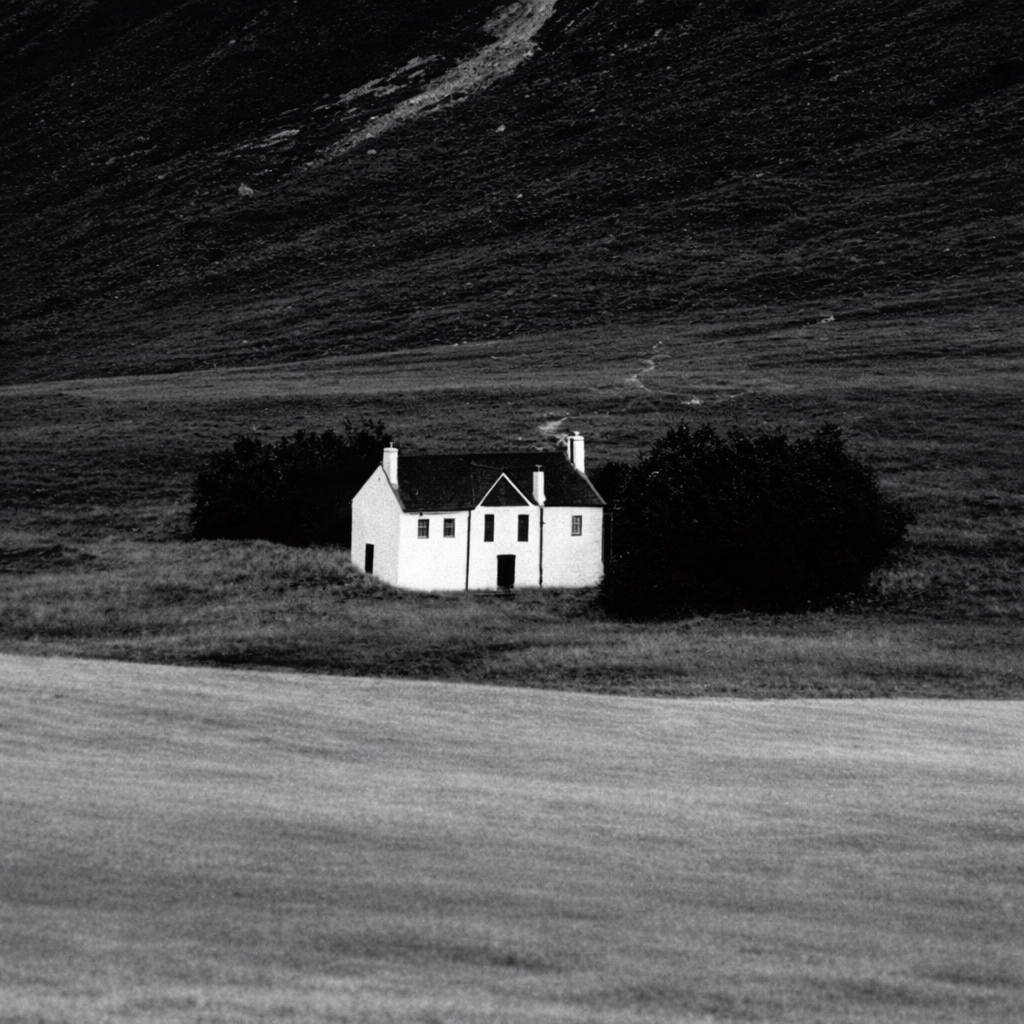
Looking at Pictures Overview
Images reveal how attention shapes reality, from art history to cultural change.
The way we look determines what appears.
Loading transcript… If it doesn’t load, download the transcript.

Looking at Pictures
What we notice reveals how we see.
Looking at Pictures takes images as its starting point, not in order to analyse art history for its own sake, but to illuminate something far more fundamental: the way attention shapes reality. McGilchrist suggests that how we look is never neutral. The brain’s hemispheres attend to the world differently, and those differences leave visible traces in art, culture, and even mental illness.
At the most basic level, the left hemisphere tends to focus on what stands out from its surroundings. It isolates figures from background, turning what it sees into discrete objects. The right hemisphere, by contrast, is attuned to the whole field. It perceives depth, context, and relationship. This distinction may sound subtle, but McGilchrist argues that it lies at the root of many philosophical errors — particularly the assumption that the world is fundamentally composed of separate, self-contained things.
One striking manifestation of this difference appears in certain forms of psychosis. McGilchrist draws attention to paintings by people with schizophrenia in which an eye intrudes into the picture itself. The eye, which should remain the unseen ground of perception, becomes an object within the scene, watching and monitoring. This reflects a painful increase in self-consciousness: the self observing itself observing. Attention collapses inward, severed from the world it is meant to meet.
Such hyper-reflexivity is not confined to pathology. McGilchrist notes its echoes in contemporary culture, particularly in film and virtual media. Stories like *The Truman Show* dramatise a growing anxiety that one is always being watched, recorded, or evaluated. Once attention turns obsessively upon itself, action becomes difficult. What should flow effortlessly — walking, speaking, responding — requires deliberate control, often to the point of paralysis.
From here, the conversation widens into art history. McGilchrist contrasts late medieval images, which depict what is *known*, with Renaissance paintings that show what is *seen*. In the earlier images, scale reflects importance rather than perspective: bishops loom larger than peasants, regardless of physical space. Meaning must be decoded intellectually. The picture does not invite inhabitation; it demands interpretation.
With the rediscovery of perspective, something remarkable happens. Depth in space appears, and with it a sense of presence. The viewer is drawn into the scene rather than held at a distance. Paintings acquire not only spatial depth but temporal depth as well. A Renaissance nativity situates itself within history, linking past, present, and future in a single image. Figures move toward the viewer, implicating them in the unfolding story.
McGilchrist suggests that this flowering of perspective mirrors a cultural flourishing. Faces become individual. Expressions carry movement and emotion. People are no longer symbols alone, but persons with whom one might enter a relationship. As cultures decline, these qualities recede. Hierarchy returns. Faces flatten into masks. Perspective collapses.
This pattern can be traced even more finely in the orientation of faces in portraiture. Across long stretches of cultural vitality, artists disproportionately depict faces turned toward the viewer’s left, exposing the more expressive side of the face to the viewer’s right hemisphere. As cultures ossify, faces stare straight ahead once more — impassive, remote, interchangeable.
Modern art complicates this story. McGilchrist is careful not to dismiss it wholesale. Great artists can transcend unpropitious cultural conditions. Turner and Claude, for example, achieve extraordinary depth through light and colour rather than literal depiction. Their work is not abstract in the sense of being detached from reality; it is deeply embodied, inviting immersion rather than explanation.
The problem arises when art loses all constraint. Without some tether to reality, creativity becomes unmoored. McGilchrist observes that constraint is not the enemy of freedom but its condition. Just as poetry flourishes within metre, painting flourishes within form. Total freedom produces little more than noise.
What this conversation ultimately asks of us is humility. To look without immediately categorising. To allow images to work on us before we demand meaning from them. Seeing, like living, requires openness. When attention is rightly oriented, the world reveals itself not as a collection of objects, but as a field of relations in which we already belong.
Test your memory of the Looking at Pictures conversation. Choose the best answer.
The left hemisphere tends to:
The right hemisphere is attuned to:
Schizophrenic paintings with an eye depict:
Late medieval images depict what is:
Renaissance perspective introduced:
Flourishing cultures often show faces turned:
Constraint in art is:
Turner and Claude achieve depth through:
Hyper self-consciousness tends to:
Looking well requires:
“Seeing requires openness before meaning.”
Next chapter
Continue into Chapter 18 to explore gender and the hemispheres.

Explore
 Free
Free
 Preview
 Preview
 Preview
 Preview
 Preview
 Preview
 Preview
 Preview
 Preview
 Preview
 Preview
 Preview
 Preview
 Preview
 Preview
Preview
Preview
Preview
Preview