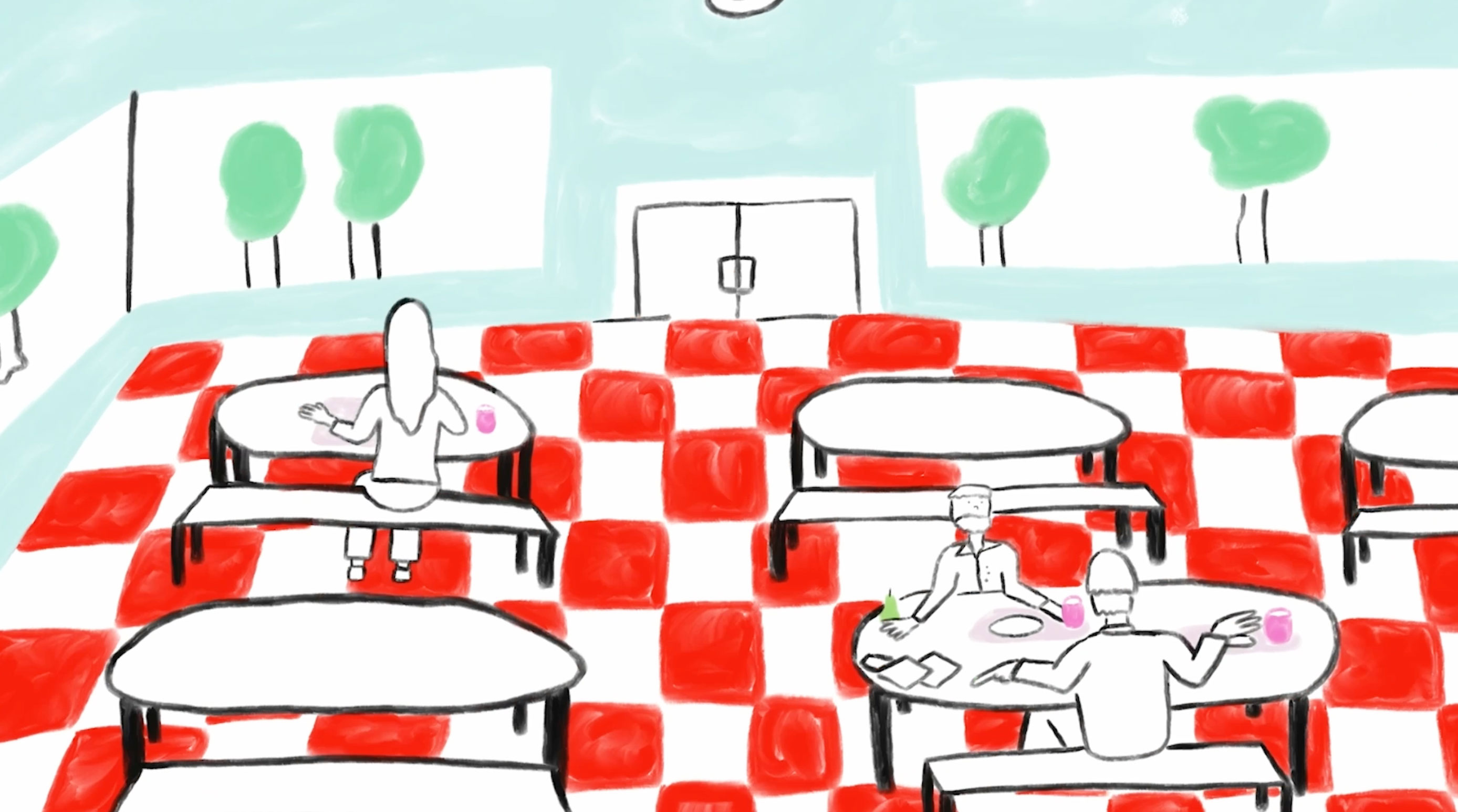
From poetry to psychiatry, follow the thread that led McGilchrist into the mind-body problem and the brain's two modes of attention.
Directed by Kylie Krämer
Journey to the Brain Overview
McGilchrist retraces the path from literary criticism into medicine, describing how the mind-body problem pulled him toward psychiatry and the right hemisphere.
Listen for Oliver Sacks, the John Cutting lecture, and the early sparks that became The Master and His Emissary.
Loading transcript… If it doesn’t load, download the RTF.
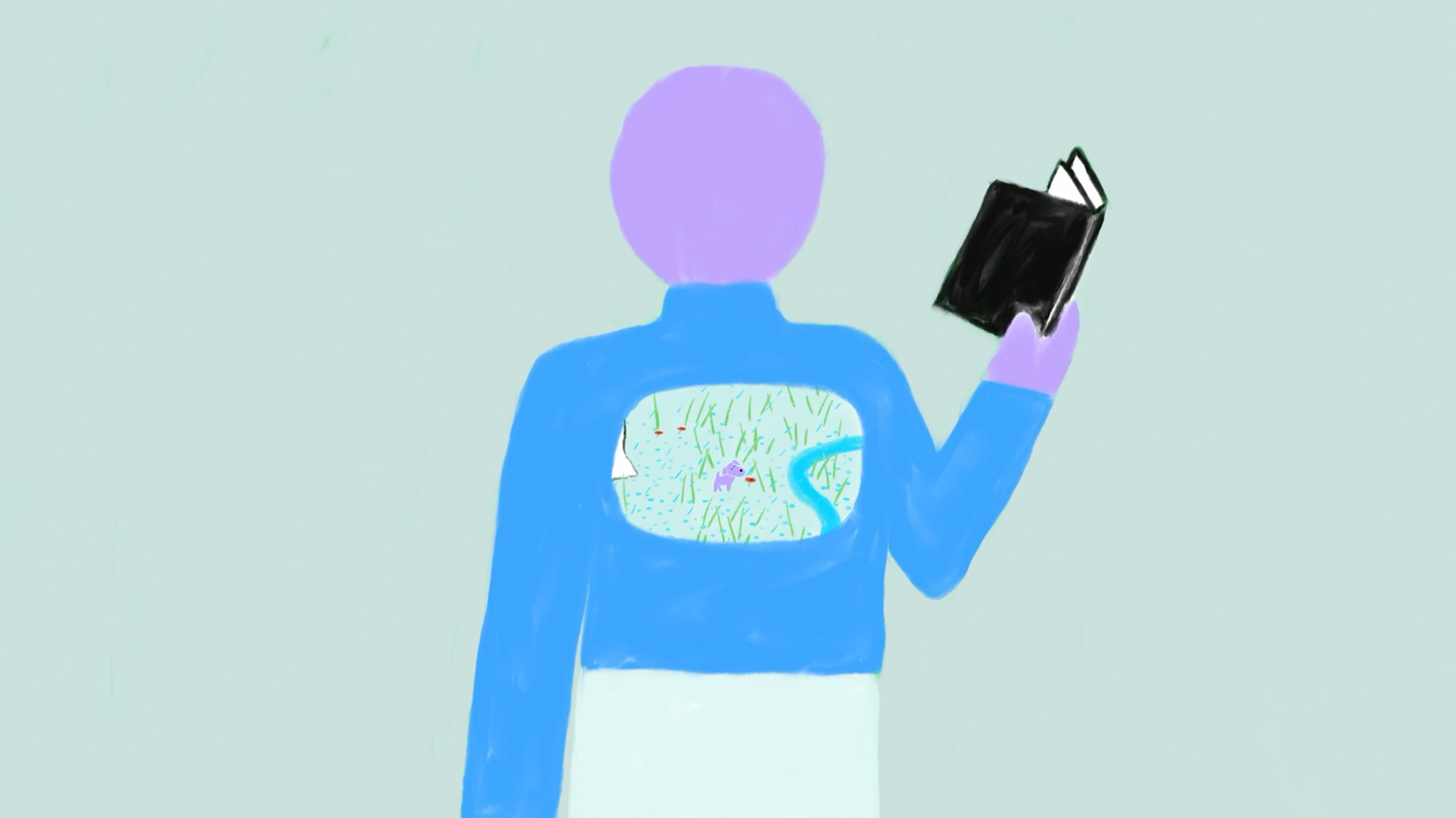
Journey to the Brain
From poetry and music to psychiatry, the mind-body problem becomes a lived question.
Exploring the mind body problem through the analysis of literature
McGilchrist’s lifelong interest in the mind body problem came about through a concern with the way in which we study literature, explored in his book “Against Criticism”. McGilchrist argues that the analytical dissection of literature in an academic environment is entirely cerebral and disregards the embodied experience of reading a piece of writing.
“As soon as you start to unpack a poem, its sort of force, disappears; like laboriously explaining a joke, it’s no longer funny.”
McGilchrist argues that the understanding of a poem cannot be extracted in a seminar room, it must instead be felt. Reading of a poem incites all kinds of bodily reactions:
“…things happen to your bodily movement, to your heart rate, your blood pressure, to your pulse. It can make your hair stand on end. It can bring you out in a sweat. It can bring tears to your eyes.”
This physical reaction is something that cannot always be encapsulated in language, and yet the way in which we are taught to analyse literature in the seminar room is “all about language being explicit and abstracting things from their context and making them general… we started with something embodied, unique and implicit and ended up with something abstract, general and explicit. It seemed to me to have somewhat defeated the purpose of the work of Art”.
McGilchrist believes the analytical process of the left hemisphere of the brain does still have a role to play; it is useful to ask the questions, “What is this poem about? How does the poet go about addressing this? What part does rhyme or meter play in this? What about the sound, the assonance of the movement of this?”. However, this information should be in service to the right side of the brain which can see the whole of the poem, rather than simply these dissected parts.
Let’s take the example of Thomas Hardy’s “The Self-Unseeing”, which begins:
Here is the ancient floor,
Foot worn and hollowed and thin,
Here was the former door
Where the dead feet walked in.
The individual parts of this poem are quite simple, and yet when taken as a whole these parts convey a deep poetry of loss. A further example given by McGilchrist is that of learning a piece of music:
“You're attracted to it as a whole. You try to play it, then you find you need to take it apart and practice that particularly difficult bar passage at Bar 18 or whatever. And you do that and you also look at it from a harmonic point of view and see that here there's a shift to the dominant and so on. All that is fine. You must do that, but then when you go on stage to perform, you must forget all that. If you start thinking about what your fingers are doing, the thing will be ruined.”
On becoming a doctor, and a life-changing moment
McGilchrist trained as a doctor as he was drawn to the prospect of being able to directly minister to patients, as well as to more deeply explore his philosophical interests in the mind body problem.
Oliver Sacks had a big influence on him – McGilchrist had one of the first copies of Sacks’ “Awakenings”, and it impressed him, as Sacks was a doctor thinking philosophically about the meaning of what happened to his patients, “and this seemed to me wonderful and expressed exactly this coming together of the mind and the body”.
McGilchrist ended up going to Southampton medical school, which appealed as it welcomed students from non-scientific backgrounds on the principle that medicine is both a Humanity and Science.
After qualifying, he worked at the Wessex Neuro Centre as a Senior House Officer, and then went to the Maudsley in London, a Psychiatric teaching hospital, where he trained for 8 years to become a Consultant Psychiatrist. McGilchrist’s time there was marked by the life-changing experience of seeing the psychiatrist John Cutting speak on the topic of his new book, “The Right Cerebral Hemisphere and Psychiatric Disorders”.
“In medical school, I'd heard very little about the right hemisphere. Everything seemed to depend on the left hemisphere, and the right hemisphere was rather like one of those territories in maps in the old days where it's sort of "here be dragons", you know, something's going on, we don't know what.”
Based on 20 years worth of interviews with stroke and tumour patients, who’d had injuries affecting the right hemisphere of the brain, Cutting discovered a number of key points for McGilchrist: that it was the right hemisphere that understands implicit meaning, whereas the left takes things literally; language as we speak it is the tool of the left hemisphere; the right hemisphere understand the whole, the left sees the part; the right has a sense of uniqueness - when people have a stroke in the right hemisphere, they can no longer recognize individuals, they can only recognize the type or category to which they belong.
“And I thought, My God, these are all the things that we were getting wrong with our seminars on literature, explicitly talking about them in this left hemisphere orientated way, when in fact the subject was crying out for our right hemisphere to be involved in understanding it. So that was definitely one of the transformative moments of my time there. Probably the most transformative thing that ever happened to me during my psychiatric training.”
After attending the lecture McGilchrist approached Cutting and ended up working with him on research about the ways in which people with schizophrenia and bipolar disorder or depression see the world differently based on the two halves of the brain.
The beginnings of “The Master and his Emissary”
A second transformative experience came for McGilchrist whilst working on neuro-imaging in Godfrey Pearlson’s lab at the John Hopkins Hospital in Baltimore. Whilst there he received a postcard from John Cutting imploring he read “Madness and Modernism”, subtitled “Insanity in the Light of Modern Art, Literature and Thought” by Louis Sass, on the experiences of people with schizophrenia and the phenomena described in 20th century art, literature and thought. Concurrently, McGilchrist’s experience of working in America seemed to him “disturbing” in its dependence on the left hemisphere way of thinking, in that everything appeared to him as explicit, disembodied, less intuitive and disconnected from the natural world.
McGilchrist concluded that “clearly we hadn't got a society or civilization in which everybody had suddenly contracted schizophrenia. But what might be happening was that we were no longer properly paying attention to the right hemisphere, because quite clearly this world of the schizophrenics that Louis was looking at… looked very much like right hemisphere brain damage. And so putting two and two together, I thought, right, okay, perhaps our society is moving into a mindset in which the right hemisphere take on things is sidelined or even actively disregarded. And that, of course, became part of The Master and His Emissary.”
And so began the writing of The Master and His Emissary, a 20 year undertaking on the development of Western Civilisation through the lens of, to what extent was the right or left hemisphere more dominant?
“Was it a struggle? Is the pope a Catholic? I mean, it was the most monumental struggle. And at times I just despaired that I would ever write it. Indeed, I went into therapy at one stage simply to work out why I could not write this book…. I went into therapy and I never found the answer, but perhaps the answer came in that I wrote the book.”

“As soon as you start to unpack a poem, its sort of force, disappears; like laboriously explaining a joke, it’s no longer funny.”
Test your memory of the Journey to the Brain conversation. Choose the best answer.
Which concern led McGilchrist toward the mind-body problem?
Which book of his first explored this issue?
Who wrote Awakenings, a major influence on him?
Where did he train as a psychiatrist for eight years?
John Cutting's lecture centered on which book?
Which hemisphere understands implicit meaning, according to Cutting?
Which hemisphere tends to take language literally?
Where was he working on neuro-imaging when a postcard about Madness and Modernism arrived?
Who wrote Madness and Modernism?
The long project that grew from these threads became which book?
Next chapter
Continue into Chapter 3 for the story behind The Master and His Emissary and the question of what it means to know.

Explore
 Free
Free
 Preview
 Preview
 Preview
 Preview
 Preview
 Preview
 Preview
 Preview
 Preview
 Preview
 Preview
 Preview
 Preview
 Preview
 Preview
 Preview
 Preview