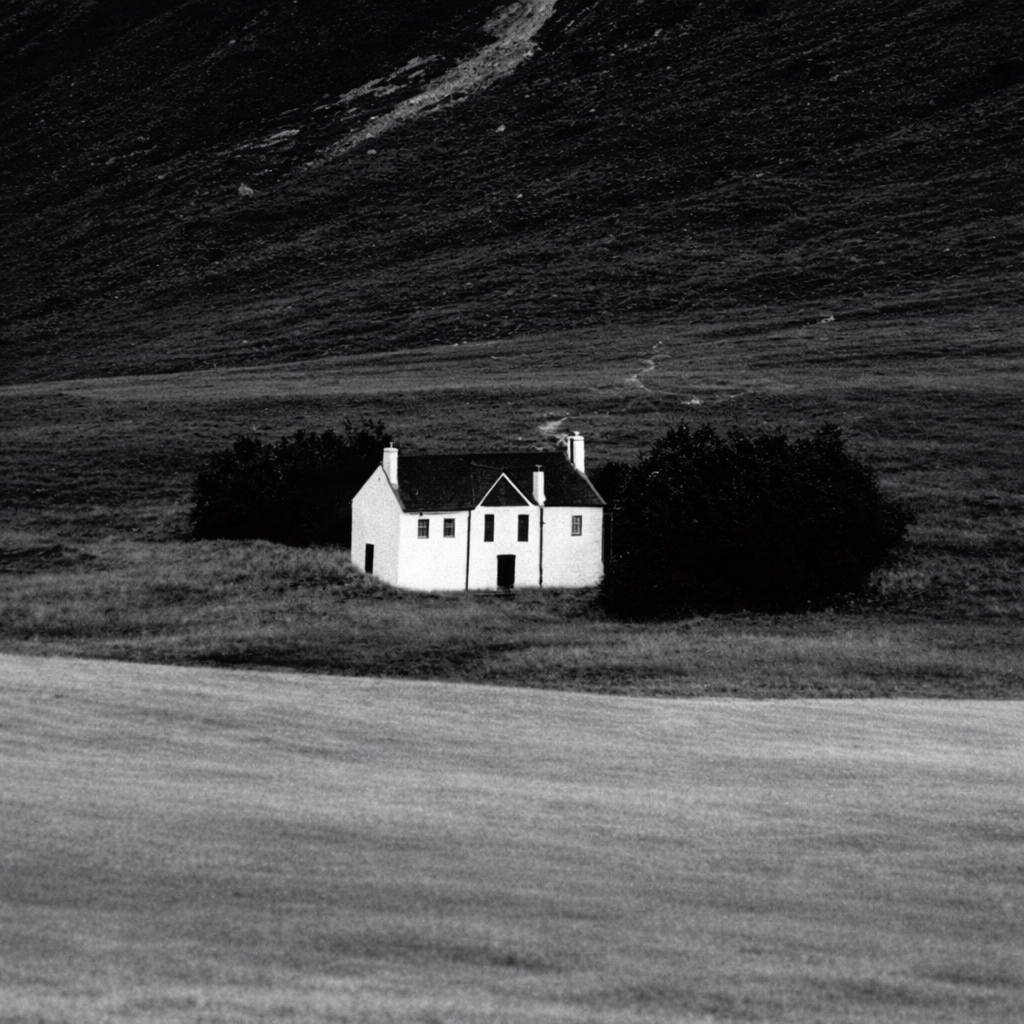
Encountering Reality Overview
Belief is framed as trust and disposition rather than mere propositions, opening onto lived reality.
Truth is participated in, not simply possessed.
Loading transcript… If it doesn’t load, download the transcript.

Encountering Reality
We do not arrive at truth by standing still; at some point, we place our weight upon the world and discover whether it holds.
There are moments in life when no amount of reasoning will deliver us safely to a conclusion. Choosing whether to marry, whether to trust, whether to commit oneself to a path or a person – these are not problems that can be solved, only lived into. One can list reasons, assemble arguments, consult probabilities, but eventually the list runs out and something else must take over. At that point, the decision is not a calculation but a disposition. It is an orientation towards the world.
In this episode, McGilchrist explores the difference between believing as a weaker form of knowing and believing as a form of trust. The distinction matters. When belief is treated as provisional knowledge – something that would become certainty if only we had more information – it remains trapped within the left hemisphere’s hunger for control. It assumes that reality is ultimately something that can be pinned down, exhausted, made safe. But this is not how the most important truths in life disclose themselves.
Truth, McGilchrist reminds us, shares its roots with trust. To believe is not primarily to assent to a proposition, but to align oneself with something encountered through experience. It is not blind faith, nor is it arbitrary. It is formed slowly, through attention, relationship, and repeated contact with the world as it presents itself. Belief, in this sense, is dispositional rather than propositional: it shapes how we stand, how we move, how we respond.
This difference becomes especially clear when we consider the idea that there is “no truth”. Such a claim presents itself as a liberation from dogma, yet it quietly smuggles in a contradiction. To say that there is no truth is itself to make a truth claim. We cannot escape truth; we can only choose how we relate to it. The refusal to adopt any disposition is itself a disposition – one that often masquerades as neutrality while covertly narrowing what can be seen.
The conversation then turns to science, and to the common assertion that one believes “in science” rather than in God. Science undoubtedly reveals truths about the world, and profound ones. But the danger arises when one mode of truth is allowed to exclude all others. Every way of seeing illuminates something while obscuring something else. When science is elevated from a method into a total worldview, it risks becoming a belief system that denies its own limits.
McGilchrist points out that madness is not typically a loss of reason, but an excess of it. In conditions such as schizophrenia, reason becomes hypertrophied, overextended into domains where it no longer serves understanding. Rationality, untethered from embodied experience, begins to spin in on itself. The result is not clarity but delusion.
This tension appears vividly in the discussion of Plato and the theory of Forms. The idea that there exists a perfect, eternal realm beyond our lived world is deeply seductive. It promises certainty, stability, and escape from the messiness of experience. Yet it also subtly devalues the world as we encounter it. The red we see, the stars we look up at, the mountain before us – all are treated as inferior copies of a reality that exists elsewhere.
McGilchrist resists this move. Our encounters with reality are not illusory; they are real, though never complete. The mountain is not something we invent, nor is it something we apprehend from behind a sealed pane of glass. We encounter it directly, from a particular perspective, within a living relationship. There may be more to the mountain than any one view can contain, but this does not make our view false. It makes it partial.
Here the familiar subject–object divide begins to dissolve. The left hemisphere constructs representations and then worries about how they correspond to an external world. The right hemisphere, by contrast, is already in touch with what is there. It does not stand apart from reality, attempting to bridge a gap; it is always already engaged. Reality, on this view, is co-constructed through relationship, not fabricated nor merely received.
This has profound implications for how we understand the self. Far from dissolving individuality, the right hemisphere underwrites it. It preserves continuity, narrative, and coherence over time. The self is not a collection of fragments or data points, but a living process that unfolds. At the same time, this self is not sealed off from the world. It is semi-permeable: distinct, yet inseparable from the larger whole of which it is a part.
The temptation of the left hemisphere is always to force an either/or where reality insists on a both/and. Individual or collective. Subject or object. Reason or experience. But life does not thrive at the midpoint between extremes; it flourishes when both poles are fully realised and held in tension. A society that crushes individuality in the name of the whole is as destructive as one that pits isolated individuals against one another in endless competition.
To encounter reality, then, is not to grasp it once and for all, but to remain in relationship with it. It requires humility, attention, and the courage to trust what cannot be fully secured. Truth is not something we possess. It is something we participate in, again and again, as we place our weight upon the world and discover that it answers back.
Test your memory of the Encountering Reality conversation. Choose the best answer.
Belief is described primarily as:
Belief as provisional knowledge reflects:
Saying there is “no truth” is:
Turning science into a total worldview risks:
McGilchrist says madness is often:
The theory of Forms can:
The right hemisphere relates to reality as:
The self is described as:
Reality resists an:
Encountering reality requires:
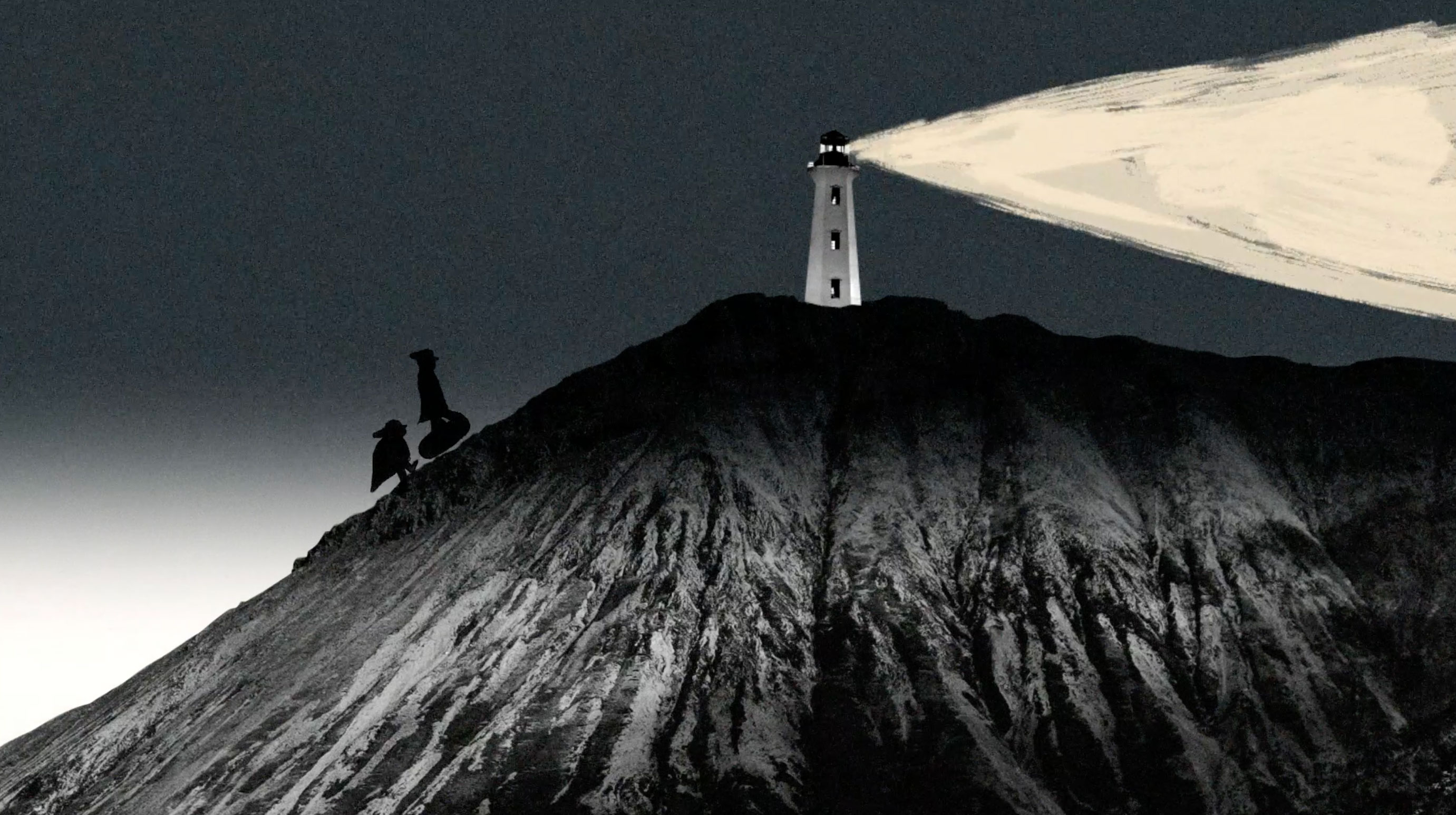
“Reality answers back when we risk relationship.”
Next chapter
Continue into Chapter 9 to explore remedial struggle.

Explore
 Free
Free
 Preview
 Preview
 Preview
 Preview
 Preview
 Preview
Preview
Preview
Preview
Preview
 Preview
 Preview
 Preview
 Preview
 Preview
 Preview
 Preview
 Preview
 Preview